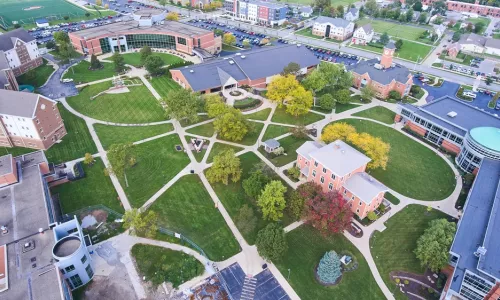
Yellow Light School

Clemson University

Yellow light colleges and universities are those institutions with at least one ambiguous policy that too easily encourages administrative abuse and arbitrary application. Read more here.

Public or Private: Public
Federal Circuit: Fourth Circuit
Head of Institution: President James F Barker
Clemson University
Office of the President
201 Sikes Hall
Clemson
Clemson, SC 29634
864-656-3413
jbarker@clemson.edu
Website: http://www.clemson.edu

« Return to School Overview

Do you have any information, updates, or changes regarding the policies at this institution? Let us know!

On this page, FIRE has excerpted policies that address speech and expression. You may download the full policy in .pdf form, below.

Restrictions on Expressive Rights

Harassment Policies (Learn More)

Red light: Office of Access & Equity: Sexual Harassment 12-13

Verbal harassment can include, but is not limited to, the following:

Sexual innuendoes, comments and sexual remarks about clothing, body or sexual activities
Suggestive or insulting sounds
Whistling in a suggestive manner
Humor and jokes about sex that denigrate men or women in general
Sexual propositions, invitations or other pressure for sex
Implied or overt threats.
Sexual harassment is defined as unwelcome sexual advances, requests for sexual factors and/or other verbal or physical conduct or written communications of an intimidating, hostile or offensive nature.
View full policy (PDF, 128 KB).

Green light: Student Handbook: Student Code of Conduct- Harassment 12-13

No student shall commit any act, verbal or physical, which has the intent or effect of unreasonably interfering with an individual's or group's educational or work performance at Clemson University or which creates an intimidating, hostile, or offensive educational, work, or living environment.
View full policy (PDF, 670 KB).

Yellow light: Office of Access & Equity: Harassment Policy 12-13

In general, harassment is unwelcome verbal or physical conduct, based upon race,
color, religion, sex, sexual orientation, gender, national origin, age, disability,
status as a military veteran or protected activity (e.g., opposition to prohibited
discrimination or participation in the statutory complaint process), that
unreasonably interferes with the person's work or educational performance or
creates an intimidating or hostile work or educational environment. Examples
may include, but are not limited to, epithets, slurs, jokes or other verbal, graphic
or physical conduct.
View full policy (PDF, 408 KB).

Yellow light: Office of Access & Equity: Harassment Policy 12-13

Examples include, but are not limited to, the following:
...
* Conduct by individuals in positions of authority or by co-workers or peers that creates a hostile working or learning environment or unreasonably interferes with the ability of a person to perform his/her employment or academic responsibilities; such conduct might include but is not limited to the following:

...

* Repeated, unwelcome requests for dates
* Sexually explicit language or writings
* Displaying or electronically transmitting lewd pictures or notes
* Remarks or conduct that demean or belittle an individual personally or in general because of his/her gender. (This type of gender harassment is a violation of the policy even though the remarks are not sexually provocative and the conduct does not involve sexual advances.)
Sexual harassment is one of the oldest forms of sex discrimination. It is defined by the U.S. Equal Employment Opportunity Commission as sexual advances, requests for sexual favors, and other verbal or physical conduct of a sexual nature when:

...

3. Such conduct has the purpose or effect of unreasonably interfering with an individual's work or academic performance or creating an intimidating, hostile or offensive work or academic environment.
View full policy (PDF, 408 KB).

Yellow light: Campus Living Guide: Harassment 12-13

Harassment is any behavior that would verbally or
physically threaten, torment, badger, heckle or persecute an
individual because of his/her race or gender.
View full policy (PDF, 636 KB).

Free Speech Zones

Green light: Facility Use Policy 12-13

Although prior registration of demonstrations and protests by students, faculty, or staff or affiliated groups is not mandatory, it is strongly
recommended.
Clemson University affiliated individuals and groups may conduct orderly demonstrations or protests if they do not
disrupt the normal or previously scheduled activities of the University or University affiliated entities, violate the free speech, assembly or
movement of other individuals or organizations, damage property, or create an unsafe situation for any individual, group or organization.
View full policy (PDF, 608 KB).

Posting Policies

Yellow light: Student Handbook: Facility Use Policy- General Posting/Publicity Locations 12-13

University Housing: All flyers must be approved by Housing as well as the Hendrix Student Center. Only recognized student organizations
may post in the residence halls.
View full policy (PDF, 608 KB).

Internet Usage Policies

Yellow light: Student Handbook: Student Code of Conduct- Computer Misuse 12-13

No student shall send abusive, obscene, or threatening messages by use of computing
facilities and services ... or send, without official University authorization, for-profit messages, chain letters, or other unsolicited communications.
View full policy (PDF, 670 KB).

Advertised Commitments to Free Expression

Green light policy: Student Handbook: Core Values 12-13

Academic institutions exist for the transmission of knowledge, the pursuit of truth, the development of students and the general well-being of society. As members of the academic community, students should be encouraged to develop the capacity for critical judgment and to engage in a sustained and independent search for truth.
View full policy (PDF, 59 KB).

NOTE: You must have Adobe Acrobat installed to view policies in PDF format.

The speech codes and policies above were last fully checked via internet and other research means by FIRE in December 2012. According to FIRE’s research the substantive policies are current at least until this date. Directory information, including the name of the president of the college or university, may have been updated more recently. If any policy has been revised, or if you believe that we are in error, please contact us.